Subscribe to get access
Read more of this content when you subscribe today.
Read more of this content when you subscribe today.
This is only one of many Old Testament passages calling for the combination of justice and righteousness.
Justice makes sense to us, but the concept of righteousness has become so spiritualized that we sometimes find it difficult to grasp.
This passage helps clarify for us the connection between these Biblical terms and, more explicitly, economic social issues.
Jeremiah 21:11-12 connects faith and finances; justice and righteousness equate to the rescuing the poor and oppressed who have been robbed and exploited (cf. Jer 22:3).
In contrast, injustice and unrighteousness describe the king’s extravagant lifestyle–to reach what he wants, he can’t avoid stepping on others (see Jer 22:13).
But there is also a clear social significance to this pairing of justice and righteousness.
The passage draws an interesting connection between the way we deal with the poor and the way God deals with us.
We tend to assess ourselves according to the quality of our connections with the rich and powerful, but God judges us specifically by how we relate to the poor and oppressed (see Jer 22:3-5).
The following paragraphs from economist Philip Booth introduce a discussion of Catholic social teaching in the light of economic reasoning.
Booth points out the complexities of the issues, cautioning Christians not to oversimplify the dynamic interplay of religion/faith and economic/social policy.
It might be thought that economic considerations should feature only in a minor way in a Christian analysis of policy.
Moral, philosophical, or theological considerations may be regarded as paramount.
To think this way would be a serious mistake.
Some Christians seem to wish to assume away certain economic laws when developing policies in areas such as the minimum wage or the provision of foreign aid. This is as sensible as assuming away the laws of gravity when considering the moral case for punishment by hanging.
We should also be careful before casually using words like “moral” and “just” to describe our favoured political policies.
Those words have a powerful meaning and they should not be used without care.
This is particularly so in the analysis of economic and political polices requiring compulsory redistribution of income or wealth through taxation.
The issues are much more subtle than we think.
We should also be cautious before we proceed to implement such polices lest we undermine the love and charity present when assistance is provided to those in need through an act of free will, uncoerced by the state.
Jesus Christ is the foundation of Evangelical, Prophetic, and Deliverance ministries, including Mountain of Solution. Commissioned to Evang Bro Izuchukwu Chukwunwendu with his prayer team on earth. Here are some deep things about Jesus Christ in relation to these ministries:
In the context of Mountain of Solution ministry, Jesus Christ is the:
These aspects of Jesus Christ are the foundation of Evangelical, Prophetic, and Deliverance ministries, including Mountain of Solution, which aims to spread the Gospel, prophetic teachings, and deliverance from bondage, pointing people to Jesus as the ultimate Solution.
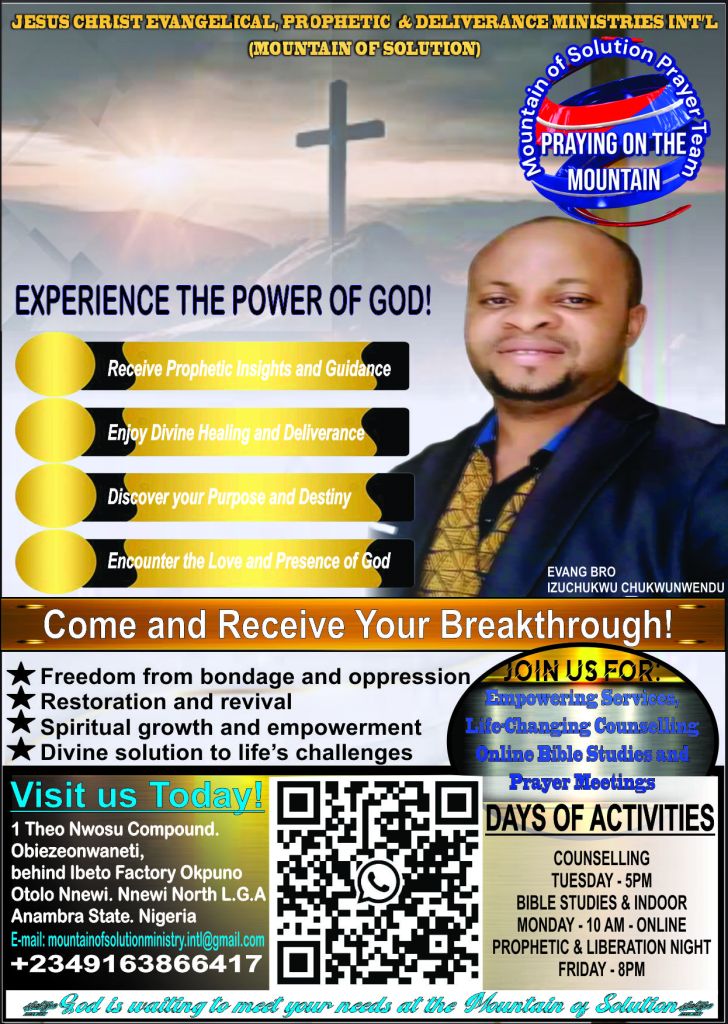
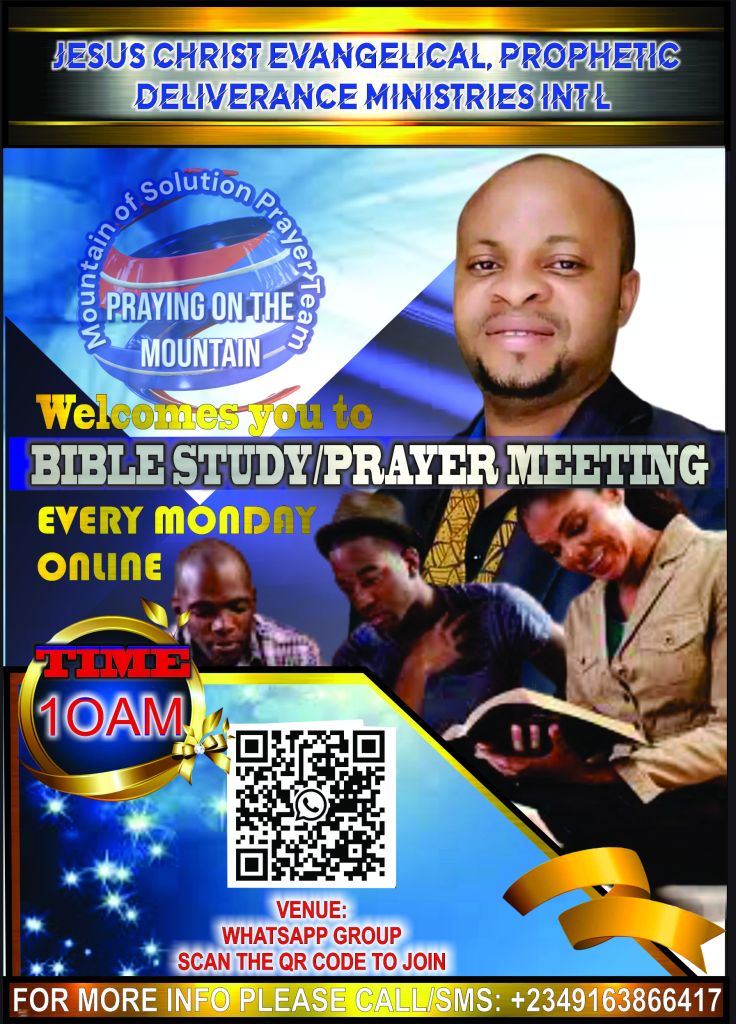
 Jesus Christ Evangelical Prophetic and Deliverance Ministry Intl
Leave a comment